FEC Startup Costs: Equipment, Fit-Out and Opening
2026年11月2日 / By safekidsplay_admin
Quick Answer
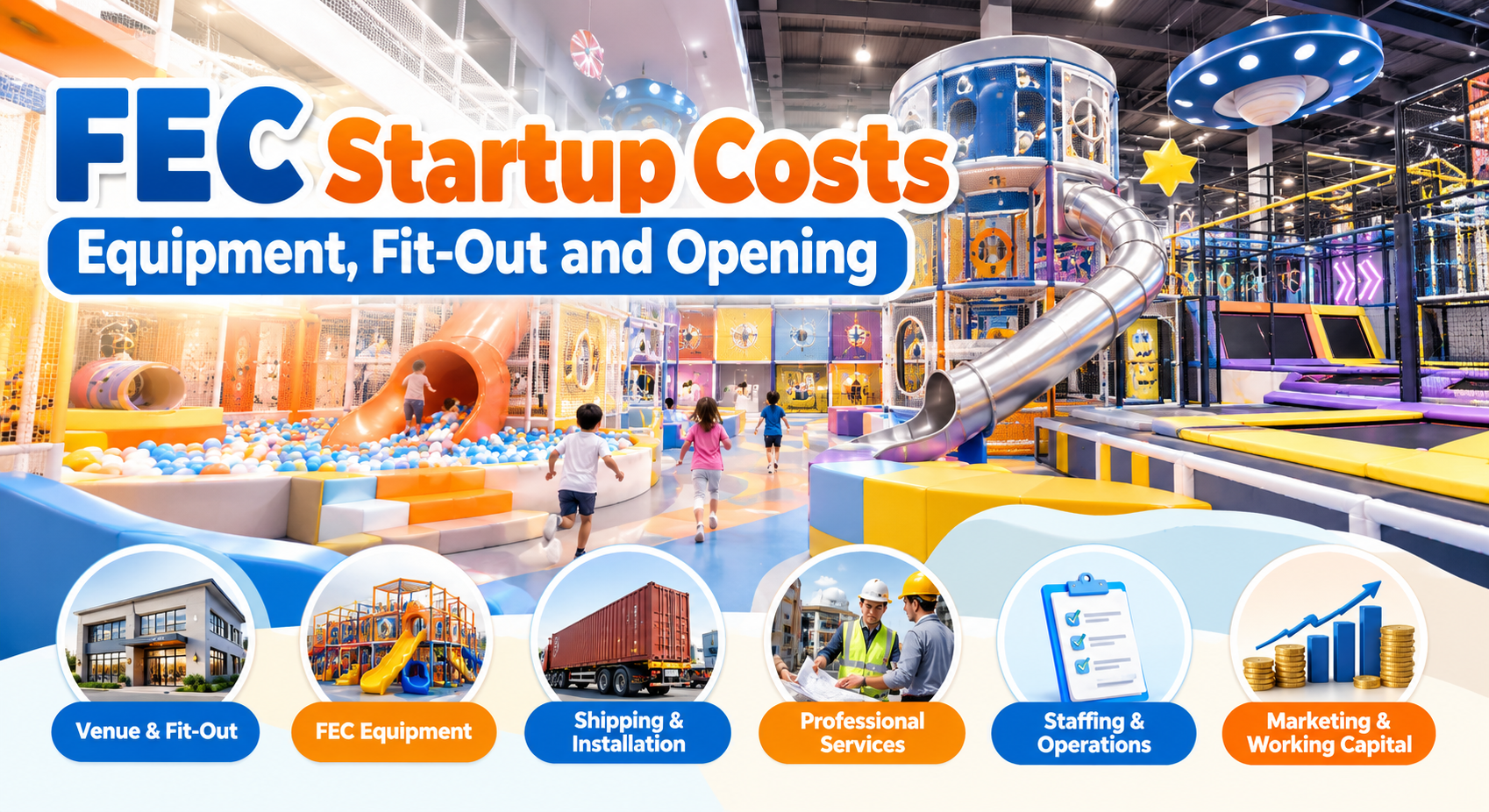
FEC startup costs should be planned as a complete opening budget, not just an equipment purchase. Investors need to account for the venue, lease and fit-out, family entertainment center equipment, design, shipping, installation, local professional services, pre-opening staffing, insurance, marketing, supplies, and working capital. The right budget depends on the concept, site condition, attraction mix, destination market, and operating model. A supplier quote is one input into the plan; it does not automatically cover every cost required to open and run the venue.
How Much Does It Cost to Start a Family Entertainment Center?
There is no reliable universal startup figure for every Family Entertainment Center. A compact family-play venue and a multi-attraction destination have different building, equipment, staffing, and operating requirements. Even venues with similar floor areas can differ because of ceiling height, renovation needs, theme complexity, local labor, and logistics.
Begin with a scope-based budget. Define the venue concept, usable area, customer groups, core attractions, party or food-service functions, and opening target. Then request project-specific quotes and separate confirmed costs from estimates that still require local contractor or professional input.
What Costs Are Included in an FEC Startup Budget?
The venue budget may include rent deposits, lease-related charges, renovation, flooring, lighting, HVAC changes, electrical work, fire systems, reception, toilets, signage, and other fit-out items. These costs depend heavily on the building and landlord requirements.
Equipment-related costs may include planning, 2D/3D design, attractions, custom theme elements, materials, packaging, freight, unloading, installation, and spare parts. Pre-opening costs may include recruitment, training, software, insurance, marketing, cleaning supplies, operating procedures, and cash reserves. Keep each category visible so omissions are easier to identify.
What Family Entertainment Center Equipment Should Be Included?
Select attractions based on the primary audience and the type of visits the venue wants to support. A family-oriented FEC may include an indoor playground, toddler/soft-play area, slides, climbing, interactive play, and party spaces. A venue serving older children and active groups may add trampoline, ninja, or other challenge zones where building conditions and operations support them.
Each attraction creates both a purchase cost and an operating responsibility. Compare the space it occupies, supervision it requires, maintenance access, expected customer use, and how it complements the core attraction. A shorter, coherent equipment list can be more useful than a crowded mix that is difficult to supervise.
How Does Project Size Affect Startup Cost?
Floor area influences equipment quantity and support-space needs, but size should be evaluated together with building condition, clear height, structural constraints, equipment intensity, and local renovation requirements. A large shell space may need significant fit-out, while a smaller unit may have expensive access or building constraints.
Prepare a measured plan and identify what area is available for play versus reception, circulation, party rooms, parent seating, storage, and services. Ask suppliers and contractors to quote against the same plan so that proposals can be compared consistently.
Which Commercial Playground Equipment Costs More to Deliver?
Cost drivers can include complex custom structures, special theme elements, interactive systems, unusual dimensions, custom slides, specialized challenge features, and project-specific engineering or installation conditions. Materials and finishes also affect manufacturing and maintenance considerations.
Instead of asking only which item is most expensive, ask what each component adds to the customer experience and what it requires over its service life. Review the scope, expected wear, replacement approach, inspection access, and any additional technical interfaces before selecting optional attractions.
Equipment-Only vs Turnkey FEC Cost: What Is the Difference?
An equipment-only quote may cover a defined equipment package and perhaps design or manufacturing, while leaving shipping, unloading, local construction, installation, utilities, and local approvals to other parties. A turnkey proposal may coordinate more stages, but the term must be defined in writing.
Use a responsibility matrix to compare offers. Mark who handles site review, design, manufacturing, QC, packing, freight, customs, unloading, local works, installation labor, tools, testing, training, handover, warranty, and after-sales. This prevents a low initial quote from appearing cheaper simply because important costs sit outside its scope.
How Can Investors Control Startup Costs Without Weakening the Project?
Prioritize the core attraction and phase optional zones if the business model allows it. Simplifying decorative details, standardizing selected modules, confirming dimensions early, and limiting late changes can reduce avoidable complexity. Cost control should not remove necessary documentation, quality checks, circulation, or maintenance access.
Keep a contingency for unknown site conditions and opening delays, and ask local professionals to confirm building-related costs. The aim is not to choose the cheapest equipment package; it is to understand the total cost of creating and operating the planned venue.
What Should an FEC Equipment Quote Include?
A useful quote should identify each attraction, major dimensions, material or component specifications, custom features, design deliverables, packing, shipping assumptions, installation scope, spare parts, warranty, payment milestones, and exclusions. It should reference the same layout that the buyer has approved.
Ask for a clear revision and change process. If the layout changes, both parties should know how the change affects price, production, shipment, and installation. Keep the final equipment schedule and quotation together so the project team can check what is actually being delivered
Decision Table: What Buyers Should Compare
| Budget Category | Typical Items to Review | Who May Need to Confirm It |
| Venue and fit-out | Lease, renovation, utilities, flooring, lighting | Owner, landlord and local contractors |
| Equipment and design | Attractions, theme, drawings and specifications | Equipment supplier and buyer |
| Shipping and installation | Packing, freight, unloading, labor and tools | Supplier, freight provider and local team |
| Pre-opening | Staffing, training, insurance, marketing and supplies | Venue operator and local advisers |
| Working capital | Cash for early operations and unexpected costs | Investor and financial adviser |
What Information Should Buyers Prepare?
Prepare the destination country and city, venue type, dimensioned floor plan, usable area, clear height, columns, entrances and emergency exits, target age groups, preferred attractions, theme direction, budget range, installation preference, and planned opening date. For a more accurate review, also provide any landlord restrictions, site photos, and the current building or CAD drawings available.
Common Mistakes to Avoid
- Budgeting only for equipment and rent.
- Assuming turnkey automatically includes every local building task.
- Comparing quotes with different attraction lists or exclusions.
- Underestimating pre-opening preparation and working capital.
- Reducing essential inspection, circulation, or maintenance provisions to save cost.
Frequently Asked Questions
How much does it cost to start an FEC?
The amount depends on venue, fit-out, attraction mix, customization, shipping, installation, and pre-opening operations. Build a project-specific budget rather than relying on a universal figure.
What equipment does an FEC need?
The mix depends on target users and business model. Common options include indoor playground, soft play, trampoline, ninja/climbing, interactive attractions, and party or parent areas.
How much space is required?
Space depends on the attraction mix and support functions. The plan should include play zones, reception, circulation, exits, supervision, storage, and any party or food-service areas.
Is an FEC profitable?
Profitability depends on demand, pricing, rent, payroll, utilization, maintenance, and management. It cannot be inferred from equipment selection alone.
Does a turnkey quote include installation?
It may, but labor, travel, tools, local contractors, unloading, and building work must be checked in the written scope.
Commercial Buyer Checklist
- Concept and target customers defined
- Venue and fit-out costs estimated
- Equipment list and design scope confirmed
- Shipping and installation separated from equipment
- Quote inclusions and exclusions reviewed
- Local building and professional costs identified
- Pre-opening and staffing budget prepared
- Working capital and contingency considered
- Maintenance and spare-parts costs included
- Project milestones tied to payment and approvals
Final Thoughts
FEC Startup Costs: Equipment, Fit-Out and Opening should be treated as a project decision supported by site data, written scope, and realistic operating assumptions. NanPlay recommends connecting design, equipment specifications, delivery responsibilities, and maintenance planning before the project is released for production.
Project CTA
For an FEC equipment proposal, provide your country and city, venue type, floor plan, usable area, clear height, target users, desired attractions, theme, budget range, and planned opening date.
Reference: https://www.nanplay.com/family-entertainment-center/