How Much Does It Cost to Build an FEC?
2026年11月3日 / By safekidsplay_admin
Quick Answer
The cost to build a Family Entertainment Center depends on the building, fit-out, attraction mix, custom design, equipment specifications, shipping, installation, and local project requirements. Buyers should estimate the full project by separating venue and construction costs from equipment costs and pre-opening expenses. They should also compare equipment-only and turnkey proposals using the same floor plan and a written list of inclusions and exclusions. Without verified project details, a single price range can be misleading.
What Is Included in the Cost of Building an FEC?
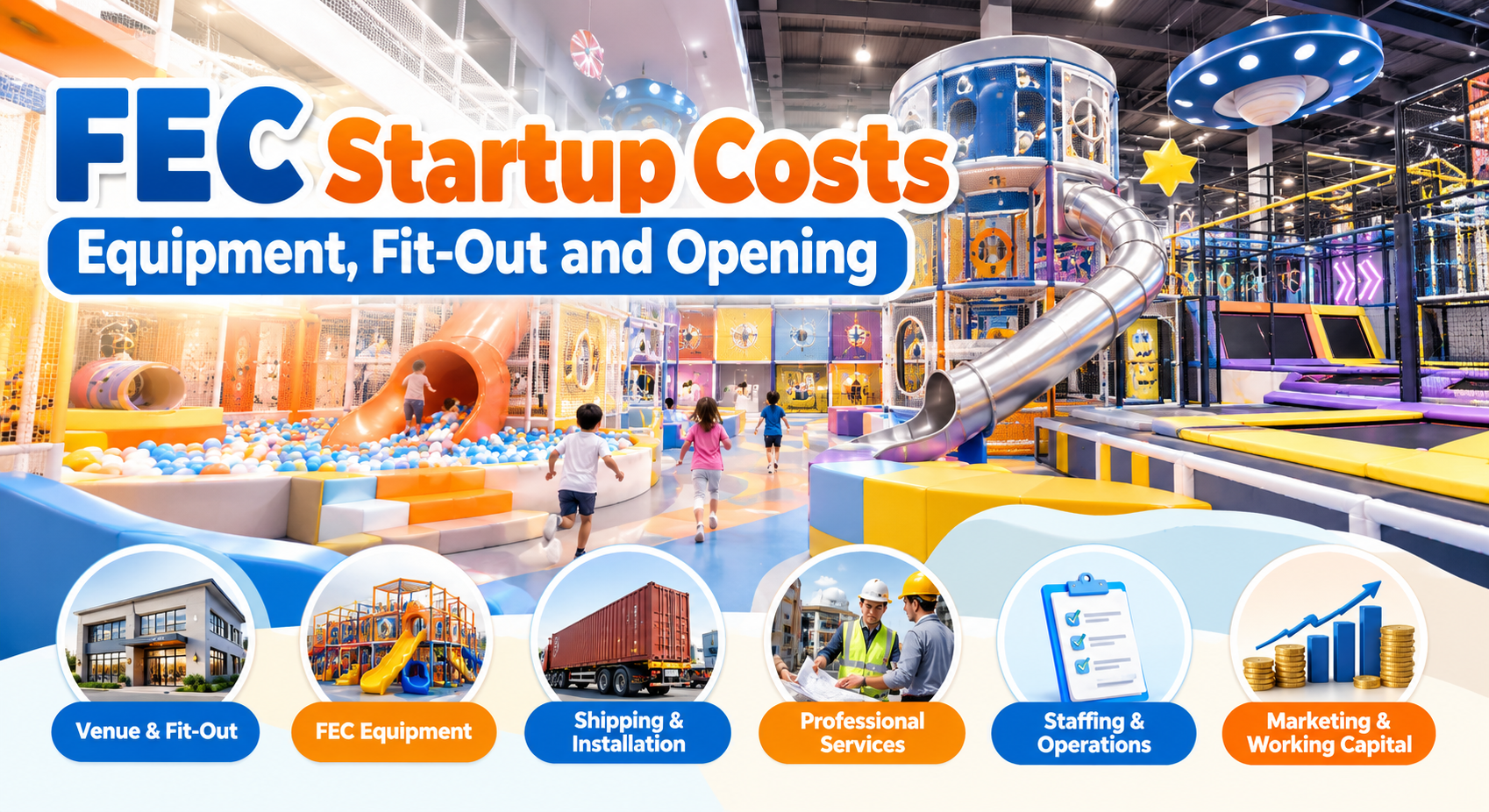
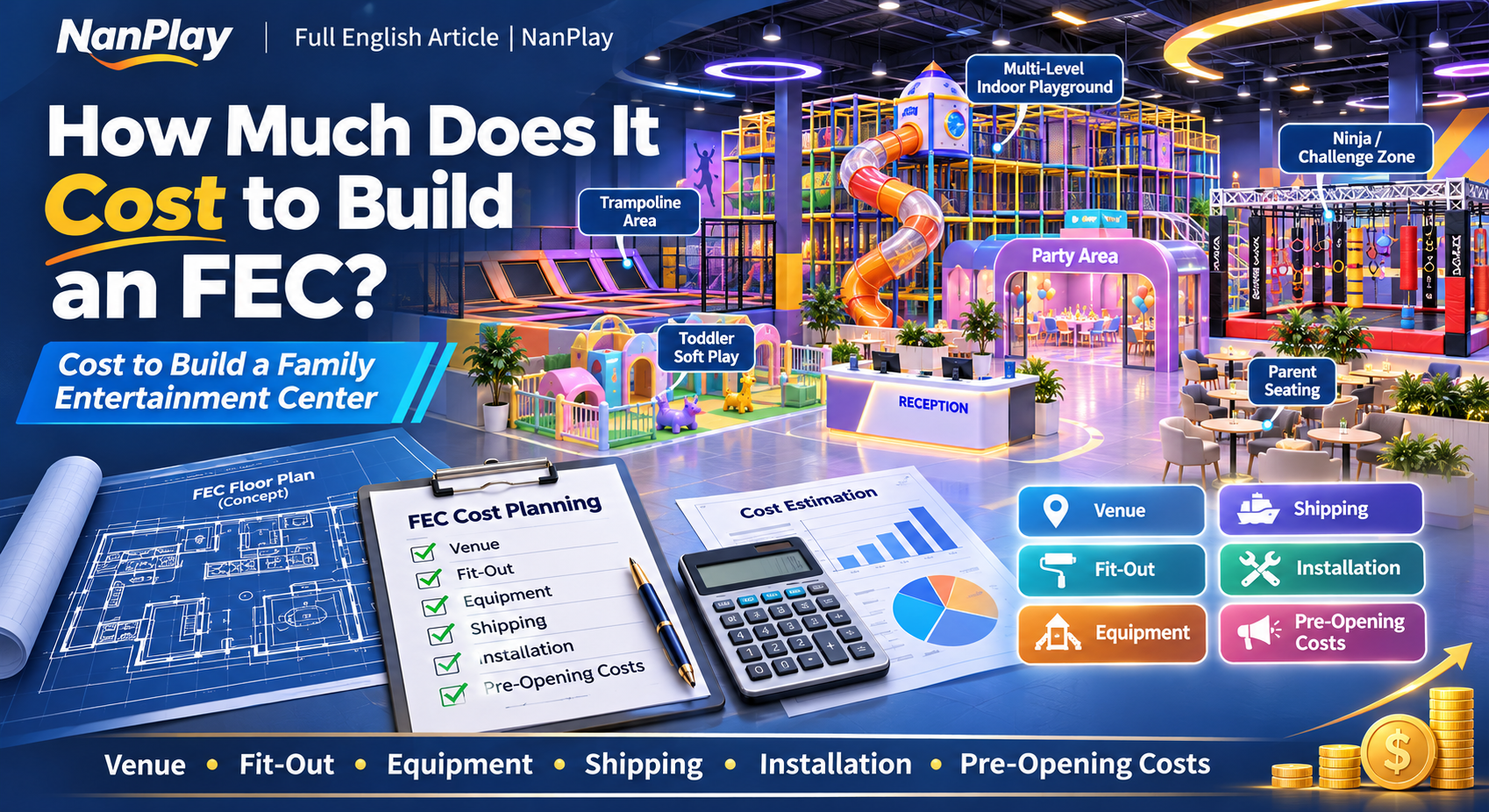
Building an FEC involves more than purchasing attractions. The total project may include lease or property costs, renovation, utilities, fire and building work, reception, customer facilities, play equipment, design, shipping, installation, signage, technology, staffing, insurance, marketing, and operating cash.
Start by separating capital costs from ongoing operating costs. Capital costs prepare the venue to open; operating costs continue after launch. Some items, such as spare parts or software setup, may sit between those categories depending on the contract and accounting approach. Define the categories consistently before comparing budgets.
How Should Buyers Estimate Family Entertainment Center Equipment Cost?
Break the equipment package into attraction groups rather than treating it as one lump sum. A project may include an indoor playground, soft-play or toddler area, trampoline attractions, ninja or climbing, interactive games, party functions, and parent areas. The relevant mix depends on target users and building suitability.
Request a detailed equipment schedule with dimensions, materials, custom features, and design references. If two quotes use different attraction lists or specifications, their totals are not directly comparable. Confirm whether design, packaging, freight, unloading, installation, spare parts, and documentation are included.
How Do Attraction Categories Change the Project Budget?
A multi-level indoor playground can involve structural elements, platforms, slides, netting, padding, decorative panels, and custom theme details. Trampoline zones may involve courts, frames, pads, landing features, and additional challenge attractions. Ninja or climbing zones may need specialized structures, route components, or installation interfaces. Interactive systems may add electrical or software-related requirements.
These categories should be compared by both initial scope and operating implications. Ask how components are inspected, which parts are expected to wear, whether replacements can be identified by part number, and what maintenance access is needed. The right choice is the combination that fits the venue and operating model.
What Other Costs Should Investors Budget For?
Local building work can include flooring, electrical capacity, lighting, HVAC, fire systems, toilets, accessibility changes, walls, ceiling work, and other landlord or authority requirements. The equipment supplier may not be responsible for these items, so the owner should obtain separate advice and quotes from qualified local professionals.
International projects may also involve freight, customs clearance, import duties or taxes, local delivery, unloading, storage, and site access restrictions. Pre-opening costs such as recruitment, training, insurance, software, cleaning supplies, marketing, and opening inventory should be included before the project is considered fully budgeted.
How Does FEC Size Affect Cost?
Size affects how many attractions can fit, but the relationship is not a simple straight line. A larger venue may need more equipment and staff, while a smaller or irregular space may require more custom design to work around columns, limited height, or difficult access. Theme and attraction complexity can also change cost independently of area.
Create a functional area plan before asking for pricing. Mark play zones, reception, queues, party rooms, parent seating, storage, staff space, exits, and maintenance routes. The supplier can then quote against a real scope rather than estimating from total square meters alone.
How Does Equipment-Only Compare With Turnkey Commercial Indoor Playground Cost?
An equipment-only package can be appropriate when the buyer already has capable designers, contractors, logistics support, and installers. A turnkey arrangement may coordinate more stages and reduce handoff gaps, but it does not automatically include every local construction, freight, customs, or authority cost.
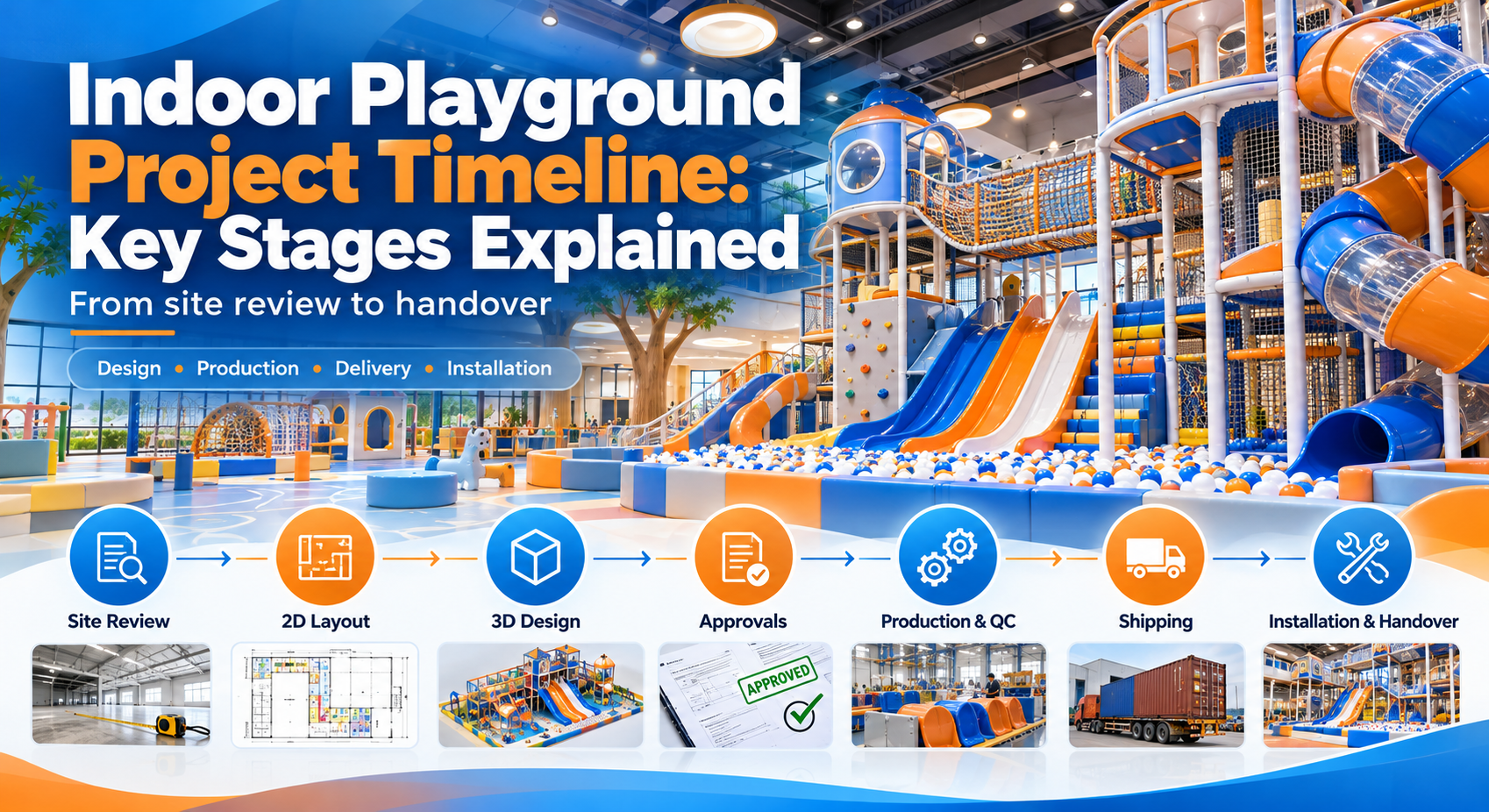
Compare the total responsibilities, not just the label. A line-by-line matrix should cover site review, design, manufacturing, QC, packing, freight, unloading, local works, installation, tools, testing, training, handover, warranty, and after-sales support. Confirm who owns each task and what happens if a dependency is delayed.
What Factors Commonly Increase FEC Cost?
Cost can increase when the scope changes late, site dimensions are uncertain, custom elements multiply, unusual materials or finishes are requested, building constraints require redesign, shipping access is difficult, or installation responsibilities are not settled early. Interactive systems and specialized attractions may also require additional technical coordination.
Control these risks by approving the floor plan and equipment schedule before production, recording material and color decisions, identifying local works, and using a formal change process. Ask the supplier to show the cost and schedule impact of a requested change before approving it.
How Can Buyers Control Commercial Playground Equipment Costs?
Prioritize the core attraction and use optional features only when they support a defined customer or business goal. Simplify theme elements that add complexity without improving function, standardize suitable modules, and coordinate equipment dimensions with the actual site before manufacturing.
Do not remove essential inspection, documentation, supervision, or maintenance access to reduce the initial quote. These functions affect how the venue can be operated and maintained. A better budget comparison looks at total scope, durability evidence, replacement parts, installation, and the ability to manage the project after delivery.
Decision Table: What Buyers Should Compare
| Cost Component | What to Request | Common Scope Boundary |
| Building and fit-out | Local contractor estimate and landlord requirements | Often separate from equipment supply |
| Equipment | Detailed attraction list, dimensions and specifications | Confirm custom features and quantities |
| Logistics | Packing, freight, customs and local delivery assumptions | Confirm which party books and pays |
| Installation | Labor, tools, travel, unloading and supervision | May vary by installation model |
| Opening and operation | Staffing, insurance, marketing, supplies and working capital | Usually managed by the venue owner |
What Information Should Buyers Prepare?
Prepare the destination country and city, venue type, dimensioned floor plan, usable area, clear height, columns, entrances and emergency exits, target age groups, preferred attractions, theme direction, budget range, installation preference, and planned opening date. For a more accurate review, also provide any landlord restrictions, site photos, and the current building or CAD drawings available.
Common Mistakes to Avoid
- Treating equipment price as the total cost to build an FEC.
- Using square meters alone to estimate a complex attraction mix.
- Comparing quotes with different specifications and exclusions.
- Failing to confirm local building and fire-related responsibilities.
- Approving late custom changes without reviewing cost and schedule effects.
Frequently Asked Questions
How much does it cost to build an FEC?
It depends on the building, fit-out, attractions, customization, shipping, installation, local requirements, and opening setup. A project-specific scope is needed.
What is usually the biggest startup expense?
It varies by project. Venue, fit-out, equipment, and logistics can each be significant depending on the site and concept.
Is installation included in FEC equipment cost?
Not always. Confirm installation labor, travel, tools, unloading, local labor, and building work in the quotation.
Can buyers reduce the cost by choosing standard equipment?
Standard modules may reduce some design complexity, but the final effect depends on the venue, attraction mix, specifications, and logistics.
What should be ready before requesting an FEC quote?
A floor plan, usable area, clear height, columns, exits, target users, preferred attractions, theme, budget, and opening date.
Commercial Buyer Checklist
- Building costs separated from equipment costs
- Attraction categories and specifications listed
- Same floor plan used for all supplier quotes
- Design, packing, shipping, and installation scope defined
- Local contractor and authority tasks identified
- Custom features and change process documented
- Maintenance and spare-parts planning included
- Pre-opening expenses estimated
- Working capital and contingency considered
- Quote compared by total scope, not headline price
Final Thoughts
How Much Does It Cost to Build an FEC? should be treated as a project decision supported by site data, written scope, and realistic operating assumptions. NanPlay recommends connecting design, equipment specifications, delivery responsibilities, and maintenance planning before the project is released for production.
Project CTA
Send the floor plan, location, usable area, clear height, columns and exits, preferred attraction mix, theme direction, installation preference, budget range, and target opening date to develop a project-specific scope.
Reference: https://www.nanplay.com/family-entertainment-center/