Working with an Indoor Playground Manufacturer: What Buyers Should Prepare and Verify
2026年10月19日 / By safekidsplay_admin
Quick Answer
Before working with an indoor playground manufacturer, prepare a measured floor plan, clear ceiling height, target age range, attraction priorities, budget and project location. Then verify that the proposed layout, equipment list and quotation describe the same scope.
KanbeiPlay provides commercial playground design, manufacturing, installation support and after-sales assistance. For each order, buyers should confirm the specific deliverables, supporting documents and division of responsibilities in writing. A useful supplier discussion connects the venue’s requirements with a defined equipment package, an understandable quotation and evidence relevant to the proposed order.
What Project Information Should Buyers Prepare First?
Start with information that affects equipment selection and layout feasibility.
Provide the project country and city, venue type, usable floor area and measured floor plan. Mark columns, entrances, emergency exits, fixed obstacles and areas reserved for reception, seating or other activities.
Clear ceiling height is particularly important. Measurements should account for beams, ducts and other overhead obstructions where relevant. An approximate room height may be enough for an initial conversation, but detailed design decisions need reliable measurements.
Also explain who will use the venue. A toddler-focused play area, a mixed-age family entertainment center and a challenge-based attraction require different activity combinations.
If the site is still under negotiation, identify which dimensions and landlord conditions remain provisional. This helps prevent an early concept from being mistaken for a design ready for approval.
How Should Buyers Define the Equipment Package?
A request for “an indoor playground for this space” leaves many purchasing decisions unresolved.
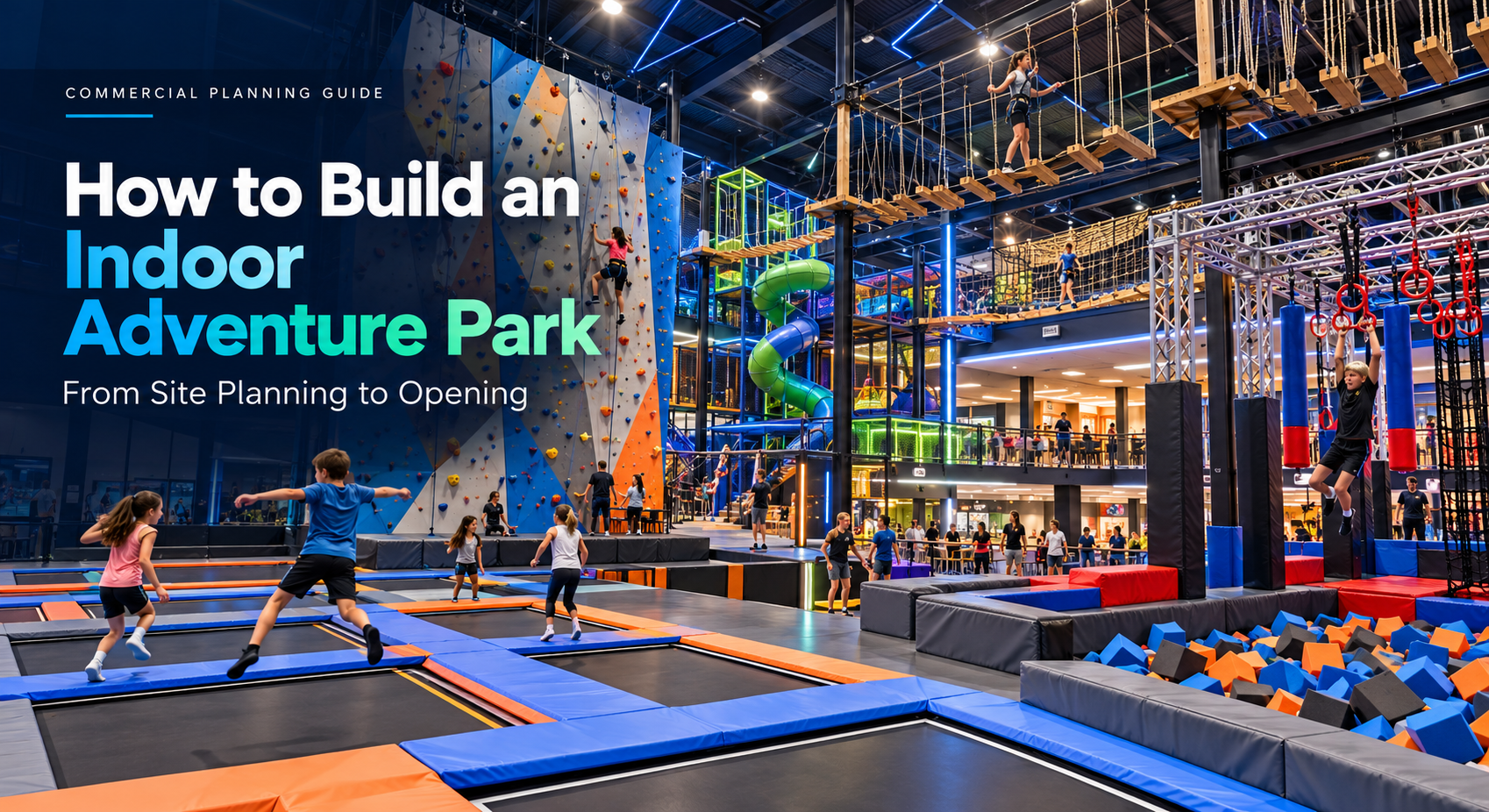
Begin with the intended activities and user groups. Identify essential attractions, optional features and areas that need separate treatment. Explain whether the project requires soft play, slides, climbing activities, trampoline equipment, ninja challenges or a combination.
KanbeiPlay’s product range includes indoor playgrounds, trampoline parks, soft play, ninja courses and adventure play equipment. The suitability of any combination depends on the available space, intended users and project requirements.
Ask for an equipment schedule that corresponds to the proposed layout. It should identify the included items and clarify the specifications needed for comparison.
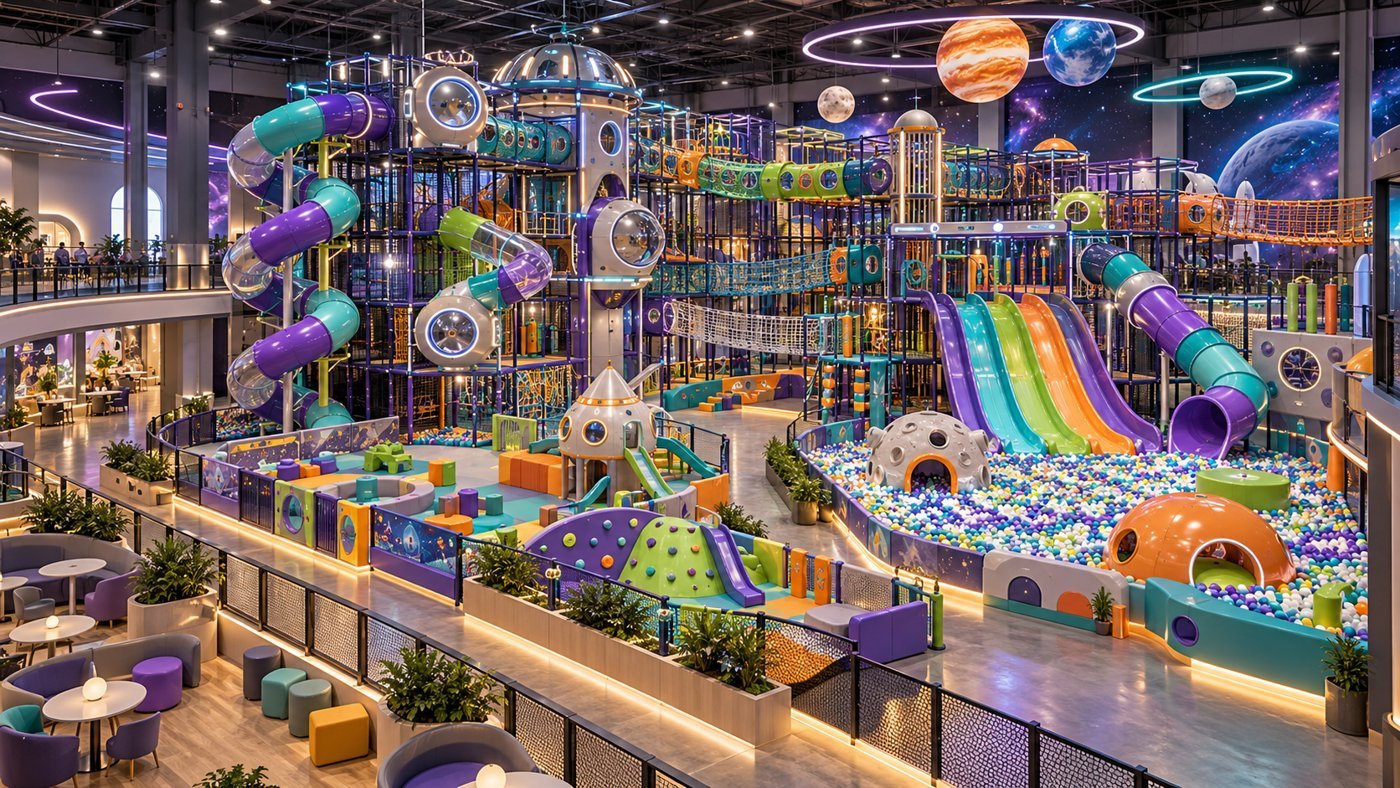
When an attraction changes, check whether the quotation and layout have both been updated. An attractive rendering cannot resolve uncertainty about what the buyer is actually ordering.
What Should an Indoor Playground Quotation Include?
A useful quotation explains both the price and the scope behind it.
Buyers should be able to identify the equipment included, the specifications used and the services covered. Clarify how packing, shipping, installation assistance and other project requirements are treated.
The table below provides a practical starting point for reviewing proposals.
| Quotation area | What buyers should verify |
|---|---|
| Equipment | Items, quantities and specifications matching the layout |
| Customization | Theme, colors and decorative elements included |
| Design | Drawings, deliverables and revision arrangements |
| Packing | Packing scope and shipment identification |
| Transport | Agreed delivery basis and responsibility boundaries |
| Installation | Remote guidance, on-site assistance or other agreed support |
| After-sales | Assistance process, parts arrangements and applicable terms |
| Exclusions | Site work, local services and other costs outside the offer |
Two quotations with similar totals may cover different responsibilities. Compare them against the same equipment list and service requirements before judging the price difference.
Any commercial terms, payment arrangements and warranty provisions should be confirmed in the actual offer and agreement.
How Should Buyers Verify an Indoor Playground Manufacturer?
Supplier verification should establish who is responsible for the order and what evidence supports the proposed scope.
Confirm the company identified in the quotation and agreement, the production location relevant to the order and the contact responsible for coordinating approvals. Where another party is involved, ask how its responsibilities are handled.
KanbeiPlay is an indoor playground manufacturer whose services include custom design, manufacturing, installation support and after-sales assistance. Buyers can use the initial discussion to request project-specific information about equipment, production arrangements and support deliverables.
Evidence should answer a purchasing question. General company photographs provide background, while order-related specifications, relevant production images and agreed inspection records can help explain how the equipment package is being delivered.
Keep design renderings, production photographs and completed-project photographs clearly distinguished. Each shows a different stage and should be described accordingly.
How Should Buyers Review Documents and Production Evidence?
Start by matching each document to the equipment being purchased.
For drawings, confirm the revision and whether it reflects the current venue information. For material descriptions, identify the components covered. For test reports or other supporting documents, check the equipment, date and stated scope.
A document associated with one item should not automatically be treated as covering every attraction in a mixed-equipment venue.
Discuss production updates before ordering. Ask what information can be supplied, when it will be available and how it will identify the relevant order. Depending on the agreement, this may include photographs, inspection records or packing information.
The purpose is to keep the approved specification and delivered equipment traceable through the project. Documents are most useful when buyers know which decision or requirement each one supports.
For background on how testing, inspection and certification differ, refer to ISO/CASCO’s conformity assessment overview. It explains general concepts; it does not establish certification of a supplier or the equipment in your order.
Who Handles Shipping, Installation and Venue Preparation?
Equipment supply is only one part of opening a commercial play venue.
Buyers should identify who handles shipment coordination, unloading, temporary storage, equipment assembly and building preparation. Access routes and delivery restrictions should be discussed early, particularly where equipment must pass through limited entrances or reach an upper floor.
KanbeiPlay’s service information includes installation drawings and technical support. Confirm whether the proposed order includes remote assistance, on-site personnel or a different arrangement, together with the associated scope and costs.
Venue preparation also needs a clear owner. Flooring, building services, fit-out and other site work should be coordinated with the equipment requirements.
Record the handover information expected at completion, including relevant drawings, maintenance guidance and component references. This gives the operating team a clearer basis for ongoing support.
How Can Buyers Keep Approvals and Changes Under Control?
Use a clear record of what has been approved.
Keep the layout revision, equipment list, specification and quotation together. Before authorizing production, confirm that they describe the same order and that unresolved items have been identified.
If a change is proposed, request its effect on the equipment package, price, delivery arrangements and installation requirements. Even a seemingly small attraction change may affect dimensions or connections elsewhere in the layout.
A simple approval record can identify:
- The document or item being approved.
- Its version or revision.
- The person responsible for approval.
- Any conditions still outstanding.
- The date of confirmation.
This approach also helps when several people are involved, such as an investor, venue manager, designer and purchasing representative. The supplier should know which contact can authorize changes.
What Information Should Buyers Prepare?
Prepare one project brief containing the country and city, venue type, floor plan, usable area, clear height, columns, entrances and exits. Add the target age groups, preferred equipment, theme direction, budget range and planned opening date.
Include the services you expect from the manufacturer and the work your own team or local contractors will handle. Flag provisional measurements and unresolved requirements so they can be addressed before final approval.
Common Mistakes to Avoid
- Requesting comparable prices without giving suppliers the same project brief.
- Treating every feature in a rendering as included equipment.
- Comparing quotations before checking their exclusions.
- Accepting documents without checking which equipment they cover.
- Leaving delivery access and installation responsibilities until shipment.
Frequently Asked Questions
Can I request a proposal before I have a final floor plan?
Yes, you can begin an initial discussion using the information available. Clearly identify provisional measurements and expect the proposal to need review once the site details are confirmed.
What if I do not know which attractions to choose?
Explain the venue type, target ages, available space and budget priorities. Ask for the reasoning behind the proposed equipment mix and how alternatives would change the layout and scope.
How can I compare quotations from different manufacturers?
Give each supplier the same brief and request a corresponding equipment list. Compare specifications, service inclusions, exclusions and responsibilities alongside the quoted total.
Should installation be discussed before ordering?
Yes. Installation arrangements can affect equipment access, site preparation, scheduling and cost. Confirm the agreed support and each party’s responsibilities before authorizing the order.
What should I keep for after-sales enquiries?
Keep the approved equipment list, drawings, component references, handover information and applicable support terms. When reporting an issue, provide clear photographs and identify the relevant equipment.
Commercial Buyer Checklist
- Prepare a measured floor plan and clear height.
- Define the target users and attraction priorities.
- Identify provisional site information.
- Match the equipment list to the layout.
- Compare quotations using the same scope.
- Confirm the company responsible for the order.
- Review supporting documents for the relevant equipment.
- Agree shipping and installation responsibilities.
- Record approvals and subsequent changes.
- Request maintenance and replacement-part information.
Final Thoughts
Working with an indoor playground manufacturer is easier when the project brief, equipment package and responsibilities are clear from the beginning. Reliable site information helps the design discussion; a defined equipment list supports quotation comparison; and written approvals keep the order consistent.
To discuss a project with KanbeiPlay, send your floor plan and purchasing requirements. Include your location, clear height, target age groups, preferred activities, budget range and opening schedule, along with the design, delivery and installation support you need.