Indoor Playground Manufacturers: How to Compare Project Capability, Not Catalog Size
2026年9月17日 / By safekidsplay_admin
 Full English Article | NanPlay
Primary Keyword: indoor playground manufacturers
Quick Answer
Indoor playground manufacturers should be compared by their ability to manage a real commercial project, not by the number of product photos in a catalog. A useful evaluation covers site review, 2D and 3D design, attraction planning, material specifications, manufacturing and QC evidence, packing and installation support, spare parts, and project-specific documentation. A large catalog can show variety, but it does not prove that the supplier can adapt equipment to columns, clear-height limits, exits, customer flow, supervision, and maintenance needs in the buyer’s actual building.
Does the Manufacturer Start With the Building or the Product Catalog?
A project-capable manufacturer should first understand the venue. The floor plan, usable area, clear height, columns, entrances, exits, service areas, and fixed building systems define where equipment can go. If a proposal is produced before these conditions are reviewed, the buyer may receive a visually attractive package that requires significant redesign later. Site-based planning is therefore one of the clearest differences between a project process and a product-only sales process.
- Floor-plan review
- Clear-height review
- Columns and exits
- Circulation limits
- Site photos or walk-through
Can the Design Team Explain Why Each Zone Is There?
The 2D layout should do more than place equipment blocks. The manufacturer should be able to explain age zoning, the role of each attraction, entry and exit points, parent visibility, staff sightlines, queue space, and maintenance routes. The 3D design should then visualize the approved planning logic. Buyers should be cautious when the 3D concept is treated as the first and only design step, because appearance can hide operational weaknesses.
- Age zoning
- Attraction roles
- Customer circulation
- Staff visibility
- Maintenance access
What Manufacturing Evidence Should Be Available?
Commercial buyers can ask to see the production process relevant to their project: structural fabrication, welding, finishing, soft padding, panels, nets, trial assembly, quality checks, labeling, packing, and container preparation. The exact process varies by product. The point is to verify that the manufacturer can connect approved drawings with controlled production and export preparation, rather than simply forwarding a finished-product quotation.
- Structural production
- Soft protection production
- Trial fitting
- QC checkpoints
- Packing and labeling
How Should Materials and Specifications Be Compared?
Comparisons are more useful when suppliers describe the actual materials and component specifications in the quotation or technical schedule. Buyers should avoid choosing based only on broad phrases such as “commercial grade” because different suppliers may use the same marketing term for different specifications. Ask what is used for the frame, panels, foam, covers, nets, flooring, fasteners, and high-wear parts, and ask which items vary by equipment type or destination project.
- Frame specification
- Foam and cover specification
- Panels and nets
- Fasteners/connections
- High-wear components
What Does Project Support Look Like After Production?
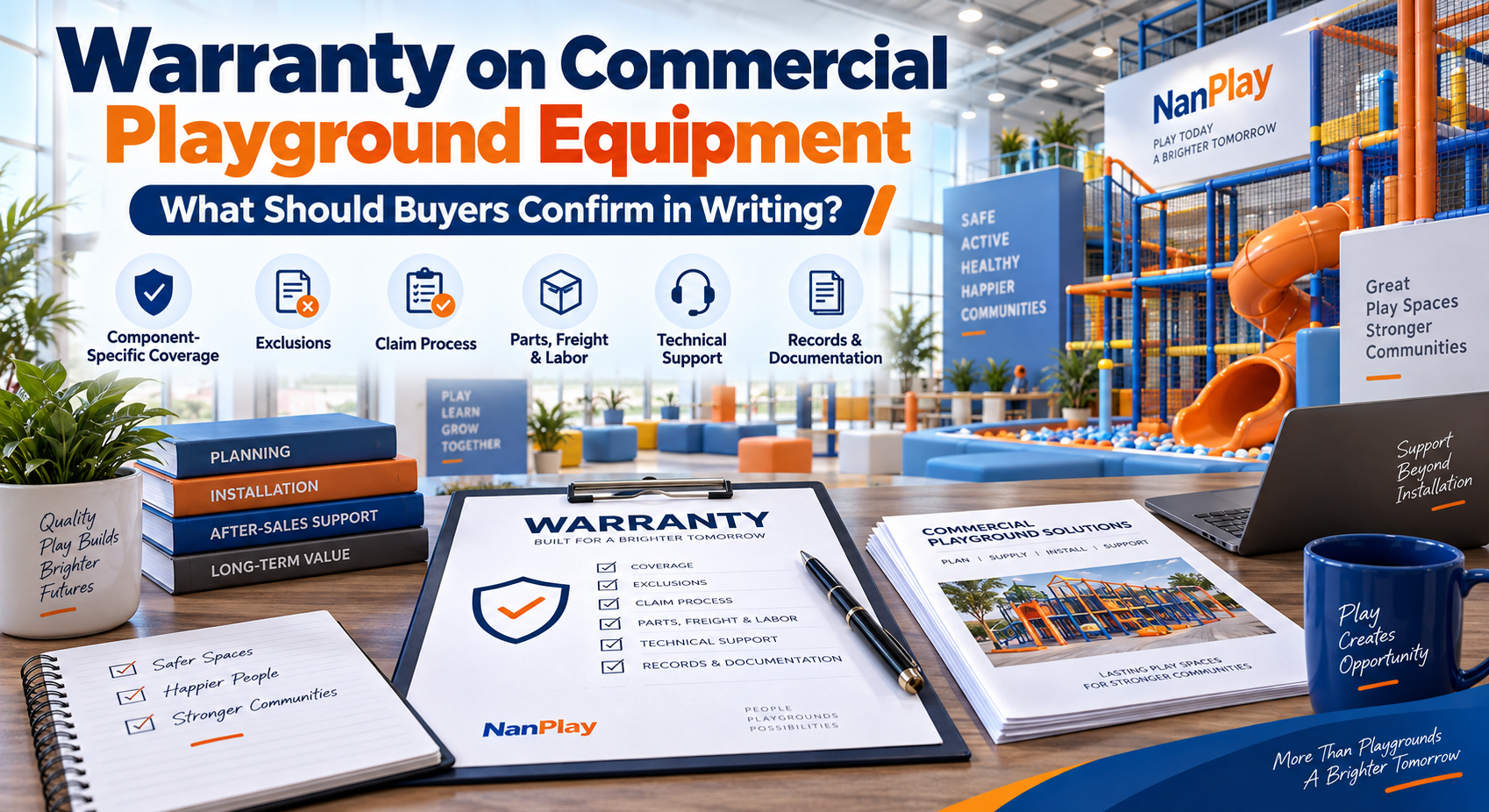
The manufacturer’s responsibility should be clear from packing through installation and after-sales. Confirm export packing, shipping coordination, installation drawings, remote or on-site support, local labor responsibilities, spare parts, maintenance instructions, and written warranty terms. Local building, fire, insurance, accessibility, engineering, or authority requirements may require local professionals. A stronger manufacturer explains these boundaries instead of presenting equipment supply as a complete substitute for local approvals.
- Export packing
- Installation scope
- Local labor boundary
- Spare-parts support
- Warranty and maintenance
What Information Should Buyers Prepare?
Use one project brief for every manufacturer: country, venue type, floor plan, usable area, clear height, columns/exits, target ages, attractions, theme, budget range, installation model, and opening date. Comparing the same brief makes differences in layout, scope, evidence, and service much easier to identify.
Common Mistakes to Avoid
- Counting catalog pages as proof of manufacturing capability.
- Accepting a 3D rendering without a practical 2D layout.
- Comparing different quotations as if they contained the same scope.
- Relying on vague material or compliance claims.
- Ignoring installation, spare parts, and local responsibility boundaries.
Frequently Asked Questions
Is a larger product catalog always better?
No. Variety can help, but commercial buyers still need evidence that the manufacturer can plan, produce, deliver, and support the actual project.
Why use the same project brief for every supplier?
It reduces scope differences and makes it easier to compare design assumptions, equipment, materials, installation, and support.
Should buyers ask for factory videos?
Yes, when they help verify relevant production and QC processes. The evidence should connect to the type of equipment being purchased.
What should be confirmed in writing?
The approved scope, specifications, packing, installation responsibilities, spare parts, warranty, and project-specific documentation promised by the supplier.
Commercial Buyer Checklist
- Compare the same project brief
- Review 2D zoning before 3D visuals
- Ask for manufacturing/QC evidence
- Compare written specifications
- Confirm installation scope
- Check spare parts and warranty
- Separate supplier scope from local approvals
Final Thoughts
The strongest indoor playground manufacturers make a commercial project easier to understand before production begins. Buyers should score how well each manufacturer converts the real building and business model into a clear layout, documented equipment scope, controlled manufacturing process, practical delivery plan, and long-term support. Catalog size is useful only after that project capability has been verified.
Reference: https://www.nanplay.com/indoor-playground/