Indoor Playground Equipment for Daycare: Age Zones, Safety and Space Planning
2026年11月20日 / By safekidsplay_admin
Quick Answer
Indoor playground equipment for daycare should prioritize low-height, age-appropriate, easy-to-supervise, and easy-to-clean play rather than high-intensity attractions. Buyers should define the children’s age range, room dimensions, clear height, staff supervision model, cleaning routine, and local childcare requirements before selecting equipment. Suitable options may include soft play, low slides, crawl features, sensory panels, balance activities, and simple climbing. The final layout should give staff clear sightlines, separate different activity levels where needed, and leave enough circulation for daily care, cleaning, and emergency access.
What Age Groups Should a Daycare Play Area Serve?
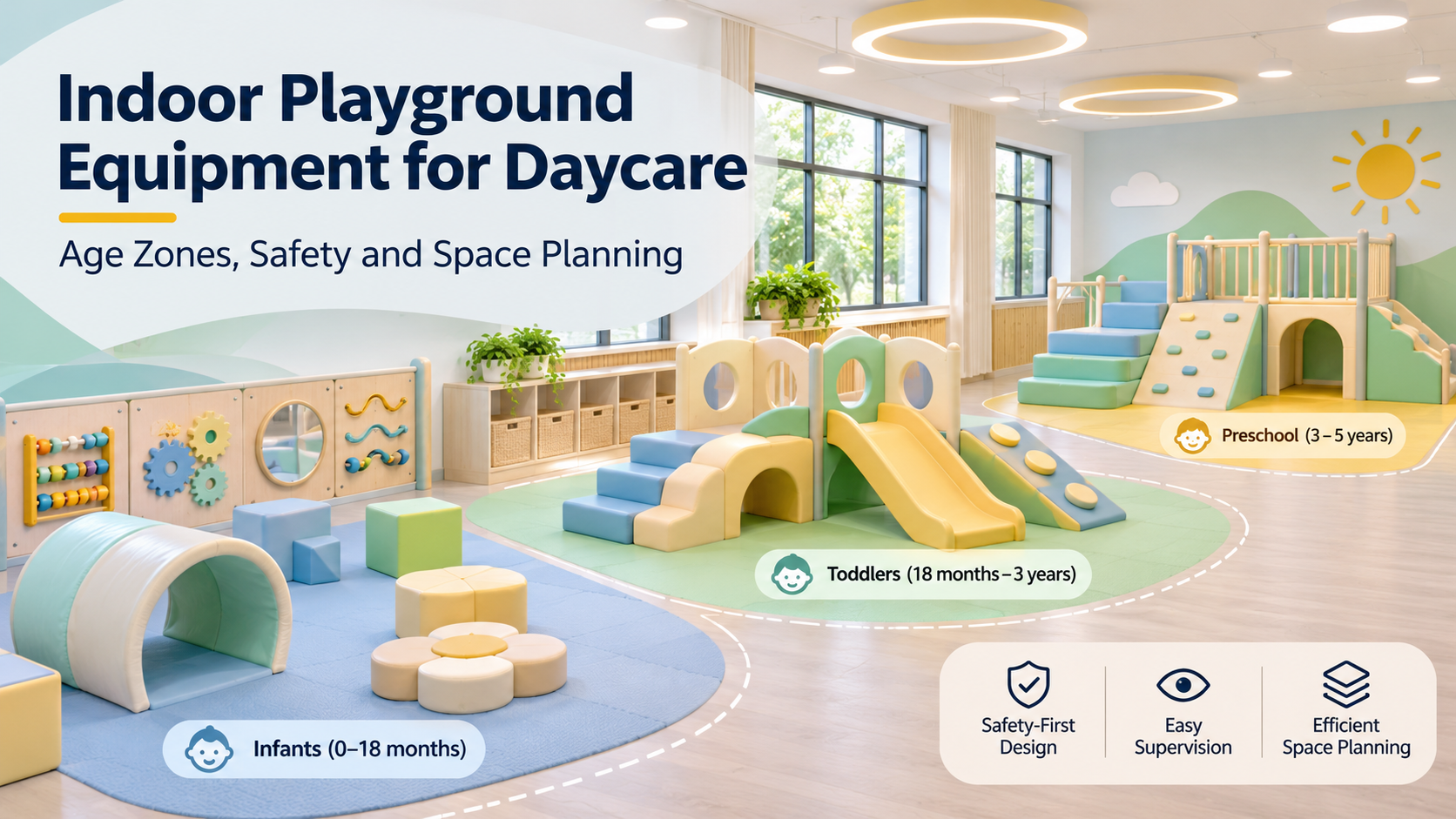
A daycare or preschool play area should begin with the actual children using the room. A mixed group of toddlers and preschool-age children may need more than one activity level because movement ability, balance, climbing confidence, and supervision needs can differ significantly.
For younger toddlers, the layout can emphasize low soft modules, crawl-through features, simple steps, sensory play, and short slides. Preschool-age children may use a wider mix of soft climbing, balance elements, and small multi-level activities when the product is designed for them. These are planning directions rather than universal age limits; confirm the intended user group for each item in the supplier’s product information and the venue’s operating rules.
Which Equipment Types Are Most Suitable for Daycare and Preschool?
The most useful daycare equipment is usually simple enough for frequent daily use and flexible enough to support movement, coordination, and supervised social play. Equipment should not make the room difficult to clean or create blind spots for teachers.
A practical mix can include soft play blocks, low slides, crawl tunnels, soft climbing steps, balance features, sensory or activity panels, and small ball-play areas where the operator’s cleaning process supports them.
| Equipment type | Typical role | Buyer check |
| Soft modules | Crawling, stepping, and simple movement | Low height and easy cleaning |
| Small slides | Repeated active play | Clear entry/exit and suitable landing area |
| Sensory panels | Quieter, exploratory play | Durable surfaces and replaceable components |
| Soft climbing | Balance and coordination | Age suitability and supervision |
| Crawl features | Movement and exploration | Access for cleaning and inspection |
How Should the Space Be Zoned for Supervision?
A daycare layout should make supervision easier rather than requiring staff to stand in multiple isolated positions. Entry points, low-height play, quieter sensory activity, and storage should be organized so staff can understand how children move through the room.
Avoid placing tall decorative panels or enclosed elements where they block sightlines. If the room serves different ages, use equipment arrangement, floor treatment, or low boundaries to make the zones understandable without creating unnecessary barriers. Staff access, cleaning routes, and emergency access should remain clear.
What Materials and Cleaning Features Matter?
Commercial daycare equipment receives repeated contact, so buyers should ask how surfaces are constructed and maintained. Request information about foam or padding, outer covers, plastic panels, seams, edges, fasteners, and replaceable components where relevant.
Cleaning instructions should be material-specific. Ask which products can be used on covers and panels, whether removable items can be taken out for cleaning, how ball-play areas are managed, and how staff can reach the spaces behind or beneath equipment. A design that is difficult to clean can create unnecessary operating work even when it looks attractive in a rendering.
What Safety and Local Requirements Need Confirmation?
Equipment-related requirements depend on the destination market, the product category, and the facility type. A daycare buyer should confirm the equipment documentation required for the supplied products and separately review local childcare, building, fire, accessibility, and operating requirements with qualified local professionals or authorities where necessary.
Do not treat one certificate as proof that the whole daycare room or building is compliant. The supplier should identify the scope of the documents it provides, while the buyer coordinates requirements that belong to the facility and local operating environment.
How Should Daycare Buyers Plan Maintenance and Replacement?
Even low-intensity play equipment needs routine checks. Staff should look for damaged covers, loose components, worn surfaces, missing protection, or anything that changes the way a child enters or uses the equipment.
Ask the supplier how replacement covers, panels, or modules are identified and ordered. Keep product information, drawings, maintenance guidance, and repair records together. When an item has unresolved damage, restrict access until the operator has completed the appropriate assessment or repair.
What Information Should Daycare Buyers Prepare?
Prepare the country and city, facility type, children’s age ranges, room dimensions, clear height, doors and exits, fixed furniture or columns, expected daily use, preferred play functions, cleaning requirements, budget range, and opening or renovation date. A floor plan and current room photos help the supplier understand supervision and circulation before proposing equipment.
Common Mistakes to Avoid
- Choosing equipment only from catalog photos without checking the room.
- Using the same activity level for toddlers and older preschool children without review.
- Filling the room so densely that staff sightlines and cleaning access are reduced.
- Ignoring local daycare/building requirements because equipment documents are available.
- Waiting until after installation to ask how covers or components are replaced.
Frequently Asked Questions
What indoor playground equipment is suitable for daycare?
Low-height soft play, crawl features, small slides, sensory panels, balance activities, and simple climbing can be suitable when designed for the intended age group and room.
Should toddlers and preschool children use the same play area?
They may share some functions, but different activity levels often benefit from clear zoning and age-appropriate equipment.
How much space is needed?
There is no universal minimum. The room needs space for the equipment plus circulation, staff access, exits, cleaning, and supervision.
What materials are easiest to maintain?
The answer depends on the product. Ask for material-specific cleaning instructions and replaceable high-wear components.
Can daycare equipment be customized to a theme?
Colors and selected decorative elements can often be customized, but function, supervision, and cleaning should remain the priority.
Commercial Buyer Checklist
- Age groups defined
- Room dimensions verified
- Clear height and exits recorded
- Low-height equipment prioritized
- Staff sightlines reviewed
- Cleaning access checked
- Material specifications requested
- Local facility requirements assigned for review
- Spare/replacement process understood
- Final layout and equipment schedule approved
Final Thoughts
Indoor playground equipment for daycare should support daily care routines as well as play. NanPlay recommends starting with the age groups, room, and supervision model, then selecting simple commercial equipment that can be cleaned, inspected, and maintained realistically.
Project CTA: Share the daycare or preschool floor plan, room size, clear height, age groups, and preferred activities to discuss a project-specific soft-play solution.
Publishing evidence note: Verify project-specific numbers, certifications, production or delivery times, warranty terms, costs, and claims against current NanPlay evidence before publication.